Dominic Danson
We’ve all seen it. A blue-tinted office background. Generic stock music. And a CEO reading a script with the enthusiasm of someone reading a dishwasher manual. It’s the "standard corporate video," and for years, it was the safe bet.
But now, safe is risky. You need to be human.
Scroll
In an era of TikTok, LinkedIn creators, and a general exhaustion with obvious marketing, your audience isn’t looking for rehearsed precision. They’re looking for a pulse. For a while now, there’s been a shift in what works for B2B video production. There’s still a place for the standard corporate video, but it needs to evolve to meet the expectations of a media-savvy world.
Professional looks boring
For a long time, "professional" was synonymous with "filtered." Companies felt – and still quite often feel – that they had to hide their quirks, their mistakes, and their personalities behind a wall of industry jargon and bland backdrops.
The problem is that in B2B marketing, trust is the only currency that matters. And it’s very hard to trust a facade. When you remove the humanity from your video, you remove the very thing that makes a client want to work with you instead of a competitor. Being real is what matters.
Human to human
A business doesn’t sign a contract – a person does. That person has a sense of humour, they have frustrations, and they have a cringe detector that’s more sensitive than ever.
So, how do you make a corporate video that doesn't feel... corporate?
1. Ditch the script
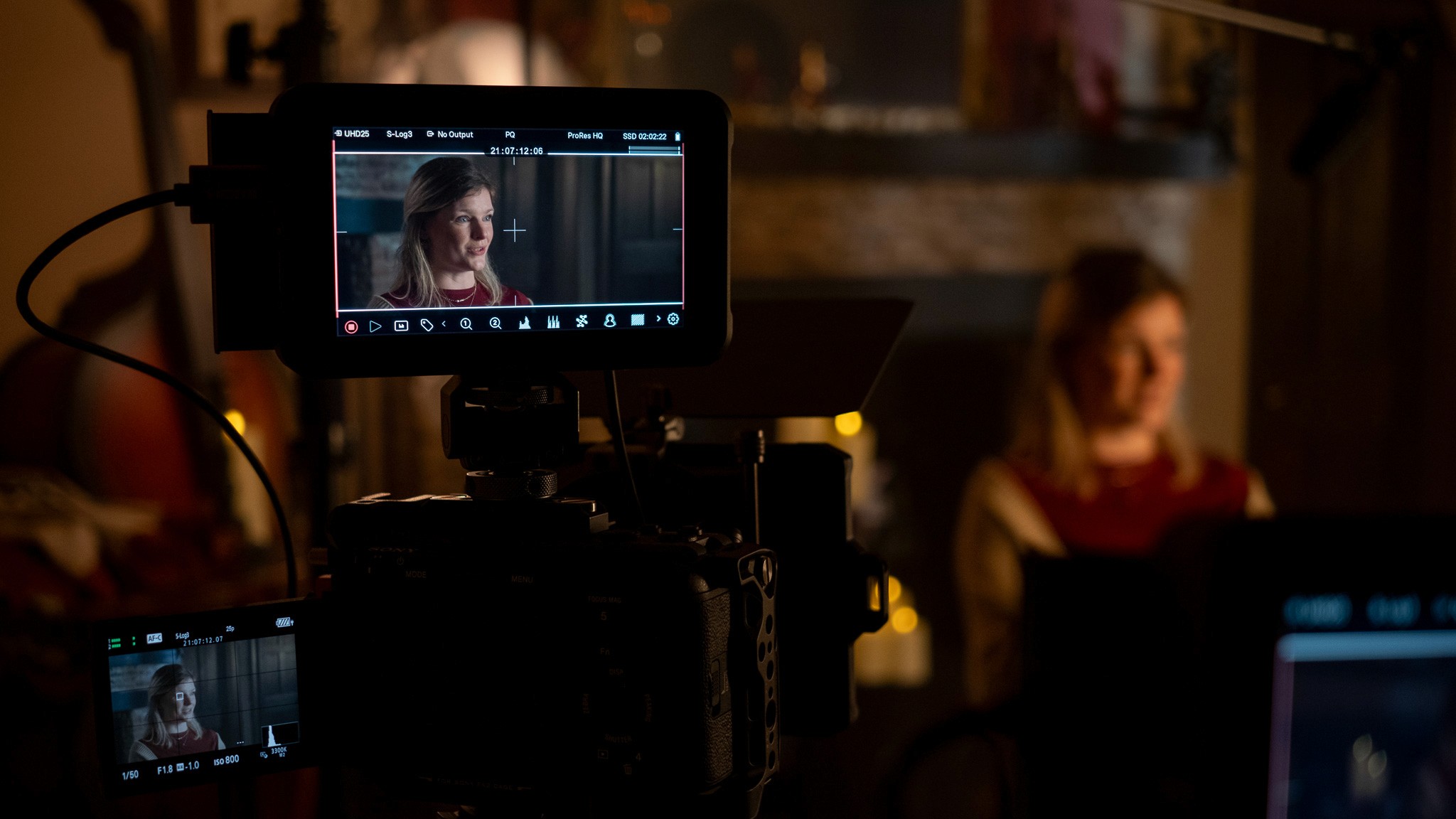
Nothing kills a vibe faster than someone reading. Same goes for rehearsed answers to questions. It’s why we never share them in advance – it’s important to get the real answers. When we work with clients, we prefer a guided interview approach. We want the "ums," the "ahs," and the genuine smiles that happen when someone talks about a project they actually care about. Those "imperfections" are exactly what make you relatable.
2. Show some of the mess
You don’t need a sterile environment to look like you know what you’re doing. Show the team collaborating in the kitchen. Show the whiteboard with the messy notes. Seeing how the sausage is made doesn't make you look unprofessional – it makes you look believable.
3. Focus on the "who," not just the "what"
Your competitors likely sell a similar product or service. And if you don’t think you have competitors then you really need to go back to that market research you didn’t do. What they don’t have is your team. New corporate videos spend less time on feature lists and more time on the people solving the problems. People buy from people they like.
4. Speak like a person, not a brochure
If you wouldn't say the word "synergistic" or "omnichannel" over a coffee with a friend, don’t say it on camera. Use the language your customers use. Same goes for reflex pronouns. It’s “I” and “me,” not “myself.”
The bottom line
The goal of your video content shouldn't be to prove how big and polished your company is. The goal is to prove that you’re a group of capable, passionate humans who are easy to work with. And it should fit neatly into your marketing funnel to help drive those all-important real-world conversations.
Twelve Noon Films specialises in finding that human thread. We do interviews. It’s our thing. We don’t just hit record – we help you strip away the corporate mask to tell a story that actually sticks.
Related services